The Greenhouse Effect
This page is an explanation of how the greenhouse effect works. I have tried to make it as readable for laypersons as possible.
The explanation is based on solid theoretical foundations and these are expanded on in The Greenhouse Effect - Technical References and Backup.
A de-mystified simple explanation
Describing how the Greenhouse effect works for laypersons is difficult as the process is outside the normal experience of humans.
We usually feel heat as a warming sensation as it is absorbed by any surface exposed to a hotter surface - like when we stand out in the sun.
Some of us are familiar with infrared cameras or goggles warn by the military that are converted to visible images.
Our eyes don't see infrared radiation, but very interesting examples of infrared imaging may be seen in TV programmes. The BBC's 'The Kingdom' contain some remarkable night-time infrared photography.
"Greenhouse gas molecules absorb and emit infrared radiaaation through a quantum-interaction characterised by vibro-rotational spectra."
This sentence, for a layperson, is gobbledygook - apologies.
It is not important to know exactly how this all occurs, but it is important to know that:
Greenhouse gas molecules can not only absorb infrared radiation but they can also emit it. In sufficiently high concentrations, greenhouse gas molecules transmit heat from the surface through the atmosphere to be, eventually, emitted to the cold of space from the top of the atmosphere.
My simplied explanation follows the Schwarzschild’s radiative transfer equation.
Schwarzschild was a brilliant mathemetician who, much to Einstein's surprise, solved his theoretical relativity equations in a very short time.
His name may be familiar as he gave rise to the 'Schwarzschild radius' concept for black holes.
(Black holes are regions of spacetime where gravity is so intense that nothing, not even light, can escape. They form from the collapsed remnants of massive stars, featuring a central singularity and a boundary called the event horizon. These invisible, dense objects are found at the centers of most galaxies).
His equation, and other technically complex issues, are further explained in The Greenhouse Effect - Technical References and Backup where (*X) refers to section 'X'.
The first half of following description is for 'Clear Skies' conditions that the reader may find covered differently by other sources. It describes a situation where there is no cloud - a condition that occurs about one third of the time.
The second half looks at the impact of clouds and 'Real Skies' conditions.
Greenhouse Effect in Clear Skies
The warm surface of the Earth emits heat as infrared radiation. This is as a flux of photons (*1).
This upward flux of photons leaves the warm surface of the Earth headed for the cold of space. Along the way some of the photons encounter Greenhouse gas molecules (GHGM *2) with which they interact.
Eventually the reduced photon flux leaves the Top of the Atmosphere (TOA *3) and heads for space.
This whole process from the surface to space occurs almost instantaneously to human observers.
The Greenhouse effect cannot be observed directly.
Different GHGMs absorb different wavelength photons.
An individual absorption peak is known as a spectral band and has a bell-like shape (*4).
The spectra of H₂O and CO₂ are very complex containing hundreds of individual peaks.
A clear skies spectrum may be observed from space (*5).
The fundamental physics and chemistry of GHGM infrared absorption as the surface heat photon flux passes through the atmosphere on its way to space is captured in Schwarzschild’s radiative transfer equation (*6).
The detail, below, of what happens as the photon flux passes through the atmosphere follows Schwarzschild’s radiative transfer equation.
What happens in the first layer (say up to the height of humans)
On emission from the Earth’s surface the photon flux soon encounters GHGMs. If a photon is the right frequency (*7) to match the vibrational energy frequency of a GHGM, the encounter may result in absorption of the photon by the molecule.
This causes the GHGM’s energy to increase and hence its temperature.
Where the effective density (*8) of GHGMs is high, encounters will be successful.
Where the effective density (8) of GHGMs is negligible, photons will not see any GHGMs and will continue up, unabsorbed, to be emitted to space through ‘the window’ (9).
When a GHGM has absorbed a suitable photon, it becomes ‘excited’ and is less likely to absorb another one. Within a short time – it may pass the extra energy to other molecules through collision (average time between collisions is 5/10000000000ths of a second).
Alternatively it could either remain ‘excited’ or emit a photon similar to the one just absorbed.
Just possibly it could absorb another photon to become 'super-excited'.
Emission of photons from first-layer molecules
The absorption of photons is balanced by emissions. Any GHGM may spontaneously emit a photon and move from an ‘excited’ state to a ‘less-excited’ state. A ‘hotter’ (more excited) molecule is more likely to emit than a ‘cooler’ molecule.
The probability of emission follow the Planck Black body relationship (*10). This is a well-known relationship that relates emission (or absorption) at any given frequency to the temperature of the emitting (or absobing) surface.
Within the first layer of the atmosphere where the flux of photons is of high intensity and the density of GHGMs is high, GHGMs will have many successful absorption encounters nearly, but not quite, balanced by emissions.
Summarising the result of activity in the lower layer
- The ‘window’ photons sail through.
- A net absorption of photons by GHGMs in the atmospheric layer leads to a tiny increment in temperature for the whole layer (<< 0.001⁰C in a short period of, say, one second) by ‘excited’ molecules passing their extra energy to other non-GHGMs before a photon emitting 'calming' event.
- For a 10-metre-thick atmospheric layer, the upper surface will remain about 0.1 ⁰C cooler than the lower surface of the layer
- The ‘upward’ flux of photons is diminished slightly by the net absorption as total emissions of photons is a bit less than the total absorption – the balance of the photon’s energy going into raising the temperature of the layer.
- Where the effective density of GHGMs (8) is high, the upward flux of photons leaving the layer will have the Planck Black body characteristics at the temperature of the upper surface of the layer (10).
The two processes: absorption and emission, occur simultaneously so it appears to an observer that the photons have, largely, ‘passed through’ the atmospheric layer with only a few being absorbed to heat the atmospheric layer.
This is the ‘Greenhouse Effect’.
The next Layers
The next layer of atmosphere receives a photon flux slightly reduced by the photons absorbed but not re-emitted in the first layer.
Where the effective density of GHGMs (*8) remains high, encounters will be successful and the probability of absorption (and hence re-emission) is only reduced by the tiny reduction in flux intensity.
The result in the next layer is similar to the first layer and similarly for successive higher layers.
Higher Layers
As altitude increases, the drop in pressure reduces the effective density of GHGMs (*8).
Some, like carbon dioxide, where the concentration (but not the density or abundance) is constant with altitude experience only pressure reduction.
Others, like water vapour experience rapid concentration and abundance drop-off with altitude.
There comes an altitude where the effective density of GHGMs (*8) no longer guarantees capture of upcoming photons and some escape through ‘the window’.
This escaping effect gets more exaggerated with altitude so there comes a point where the effective density (*8) has fallen to be nearly negligible.
This tailing-off is gradual but can be characterised by an Effective Emission Altitude (EEA *11) somewhere near the middle of the middle of this tail-off zone.
This EEA concept is important as it is critical to understanding how any increment to the total Greenhouse effect is brought about by increased atmospheric levels of GHGMs.
Into the Stratosphere:
The temperature falls off at a fairly steady rate with altitude in the Troposphere (the lower layer of the earth's atmosphere) until the Stratosphere is reached at around 8 to 20 kilometres largely depending on latitude (*12).
The idealised temperature (of about -51⁰C) is constant for the next 10 kilometres, or so, of the lower Stratosphere.
In a constant temperature profile, the thermodynamic element of Schwarzschild’s equation (*6) kicks in so absorption of photons is exactly balanced by emissions. In effect, whatever photon flux reaches the start of the Stratosphere is the same as emitted 10 kilometres higher.
However, the Stratosphere is not a completely static, homogeneous temperature layer. Local temperature gradients will favour further heat absorption (and emission) – particularly by carbon dioxide which is the only GHGM of any appreciable effective density (*8) in the lower Stratosphere.
At around 20 kilometres altitude the Stratosphere begins to warm up. By around 50 kilometres altitude it has warmed by as much as 40 to 60⁰C.
If the effective density of all GHGMs (8) remained as high as at sea-level for the warmest Stratospheric level at 50 kilometres, then TOA (3) emissions would have the signature of about 0⁰C - the Planck Black body temperature (*10).
As it happens, the effective density of GHGMs tails off to insignificance by 50 kilometres altitude.
Only two GHGMs have non-trivial effective densities (*8) in the upper (warming) Stratosphere: carbon dioxide and ozone.
The emissions from the diminished but still non-negligible effective density (8) in these warmer parts of the Stratosphere are clearly observed by satellite (5).
Clear Skies Greenhouse Effect: the three zones
There are two extreme situations and one more complex 'intermediate' situation for different frequencies of photons under ‘Clear Skies Greenhouse Effect’ conditions:
‘Window Zone’ where the effective density of GHGMs is negligible.
These photons escape to space (TOA *3 emission) with the same intensity as they had when they embarked on their journey.
‘Saturation Zone’ where the effective density remains sufficiently high
that absorption and transmission continue all the way to the static temperature profile of the stratosphere (with some augmentation from the warmer layers of the Stratosphere). The TOA (*3) emission is determined by the temperature of the stratosphere.
The Greenhouse absorption for this ‘saturation’ element is determined, quite simply, by the two temperatures: at the Earth's surface and at the start of the Stratosphere. Any increase of, say atmospheric CO2, has no effect on the GHGM absorption in this ‘saturation’ zone.
‘Overlap and Broadening Zone’
is the intermediate case where absorption gradually tails-off with altitude but can be characterised by an Effective Emission Altitude (EEA 11). Increased GHGM concentrations in this zone leads to an increment of the effective density (8) of GHGMs.
Clear Skies Discussion
Although the concentration of carbon dioxide is almost constant throughout the Troposphere, the concentration of the significantly overlapping GHGM – water – is extremely variable. Building water’s variability into the calculation is extremely complex as random, non-linear adjustments are difficult to tie-down.
In effect, the theoretical calculations relating to increased carbon dioxide concentrations which are the cornerstone of ‘Climate Change dogma’ are attempting to estimate the tiny decrement (or increments) of EEA (*11) in this overlap and broadening zone.
Using the technique of ‘Spectral Analysis’ (13), the Climate Change modellers estimate an Arrhenius (logarithmic) form equation (14) linking surface temperature – for the ‘All Skies’ case – to GHGM concentration increments.
This Arrhenius form equation is built into climate models that predict apocalyptic implications from increases in greehnhouse gas concentration.
As a chemist, it is almost heretical for me to challenge Arrhenius. But I note, here, that his equation is derived and experimentally proved from chemical reactions of ionic species in a liquid environment.
Is it relevant in the greenhouse effect discussion to describe what goes on in what I call, above, the 'Overlap and Broadening zone'?
I would challenge the Arrhenius form equation as giving a greater importance to the 'Overlap and Broadening zone' at higher levels of atmospheric CO2 at the expense of the 'Saturation zone'.
From empirical observations, including 'The Cardinal Model' (described in 'The Cardinal Model' page) backed up by the research carried out by the 1960s laboratory where I gained my Ph.D., I would suggest the form of the equation sould rather be a hyperbolic tangent form.
For non-mathematicians hyperbolic tangent (written tanh) is quite exotic - further discussed in note 14 of 'The Greenhouse Effect - Technical References and Backup' page.
The tanh form gives higher weight to the ' Saturation zone' as opposed to the 'Overlap and Broadening zone' at higher levels of atmospheric CO2.
The scientific debate about saturation has descended into Manichaen form. The Anointed maintain (as the 'good' side) - dogmatically - that increased carbon dioxide must significantly increase greenhouse effect absorption.
The 'evil' side (to which I belong) maintain that, at pre-industrial levels of CO2, the absorption effect has almost reached full saturation and that very little extra absorption results from additional atmospheric concentrations.
The dogmatic 'good' side refer to scientists holding opposing view as 'Deniers' taken in by pseudo-science. This is such an unscientific form of argument as to invalidate the 'good' side's assertion.
Hopefully, the reader of this section will be sufficiently informed to appreciate the complexity of the greenhouse effect and to be in a position to judge which side's arguments are 'pseudo-science'.
At a minimum, the should be in mind to question whether or not 'the science is settled' as contended by the 'good' side.
But however complex the reader finds the 'Clear Skies' dicussion - is compounded by considerations of 'Real Skies'.
Greenhouse Effect with Cloudy Skies
There is no accepted comprehensive theoretical basis for how clouds affect the outgoing infrared radiation into space.
Some satellite data on cloud cover is available from sources like the Copernicus Climate Data Store but is not useful for developers of 'simple' models.
For infrared radiative heat - the photon flux - from the Earth’s warm surface the meeting with the base of a cloud layer is complex.
The size of cloud water droplets is typically between 5 and 50 microns (average close to the peak 15-micron wavelength of carbon dioxide’s main absorption band).
Typically, cloud droplets are widely spaced with average distances between droplets one or two orders of magnitude greater than average droplet size.
Upcoming radiation is not reflected in the same way as the incoming sun’s radiation reflection from the top of the cloud layer. It is not mirror-like reflection but diffraction.
Diffraction is the spreading out of waves as they pass through a gap or around the edge of an obstacle. This phenomenon occurs when the size of the aperture or obstacle is similar to the wavelength of the photon.
The extent of the spreading depends on the relationship between the gap width and the wavelength, with the effect being most pronounced when they are comparable in size.
The author’s 1960s laboratory specialised in this aspect of the problem studying refraction, reflection, transmission and absorption. This was simplified by using continuous liquid phase interfaces rather than cloud droplets.
Even with a 'simple' continuous liquid phase, the experimental observations are difficult to set up and interpret. As a result, the laboratory only issued one theoretically-oriented paper on the arcane issue of the ‘Reflection Phase-shift Dispersion Relation’.
Let's just say that the initial meeting of the upcoming flux of photons with a cloud layer is very complex
I would maintain that, with our current knowledge of the processed involved, impossible to model.
That some upcoming photon flux is absorbed within clouds is beyond question – but how much and by which mechanism is unclear.
The situation within clouds is further confused by the heating effect of condensation. Water evaporated from the surface of the Earth passes upwards and cools (or super-cools) and condenses with the evolution of heat.
W. A. van Wijngaarden and W. Happer’s 2024 paper (*15) goes someway to putting a theoretical basis behind the effect of clouds.
The effect of clouds may be illustrated by taking two extreme views:
But firstly, a satellite picture of the Earth showing the extent of cloud cover:
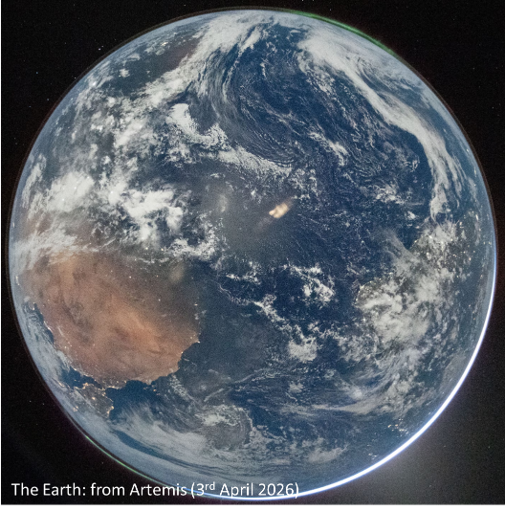
from which can be judged the importance of getting clouds right - so looking at two extreme views:
Consider cloud as a classical liquid ensemble following the laws of thermodynamics.
This implies the incident, upcoming, heat is ‘absorbed’ by the surface. This heat addition may be transmitted upwards through the cloud by physical transport, conduction, convection mixing and radiation. The emissions from the top of the cloud are then the expected emissions from a surface with the temperature of the top of the cloud (*10).
Consider a cloud layer as a collection of diffracting water droplets varying frrom 'thick' to 'thin'
where the radiation is scattered in all directions increasing residence time in the cloud layer with the outgoing radiation spread in all directions.
Any Greenhouse gas absorption is essentially determined (as elsewhere in the atmosphere) by the difference in temperature between the incoming layer’s interface and the outgoing interface, for clouds these interfaces are ‘fuzzy’.
The water droplets will also absorb some radiation in their passage of multiple reflections from the droplet’s surface. This, as studied in the author’s 1960s laboratory is not simple to estimate as it is difficcult to theoretically calculate even for one droplet as it varies with frequency and droplet size.
The closest clouds get to the ‘classical liquid ensemble’ is for very dense and massive thunder clouds stretching into the stratosphere. This cloud, where the upper surface is at Stratospheric temperature, has, theoretically, the ‘heat signature’ of lower stratosphere temperature (*10).
This has been confirmed to be the situation by satellite observation.
For very dense low cloud where there is little infrared radiation transmitted upwards through the cloud layer, the top of the cloud layer will exhibit the ‘heat signature’ of its top layer (*10). Theoretically, satellite observation of the spectrum from space will show the ‘Clear Skies’ spectrum from a surface the temperature of the cloud’s top layer.
However, the top layers of clouds are ‘fuzzy’ with different emitting surfaces at different temperatures – a nightmare for a theoretical modeller.
For very light cloud, barely unimpeded transmission upwards will be the infrared signature observed by satellite.
Only ‘window’ photons are partially reflected/refracted back to the Earth’s surface. Again, this is impossible to calculate theoretically and modellers must make grossly-simplofying assumptions.
The reflected ‘saturation zone’ photons join the upcoming photon flux to be transmitted upwards. Reflected photons in the ‘Overlap and broadening zone’ add to the complexity of estimating what goes on should the EEA (*11) be below the lower cloud layer altitude – which has a low probability of occurring.
The regional effect of clouds varies. For tropical ocean areas average surface temperatures and humidity are greater than Global averages which means that a large part of Greenhouse warming takes part in tropical areas. The impact of variability in tropical clouds impact the Tropical total Greenhouse effect variability which the largest geographic contributor to Global Greenhouse effect variability.
Polar regions, on the other hand, contribute little to the total Global Greenhouse effect so variations in cloud cover over polar regios have relatively little impact.
Variations in cloud cover also directly affect warming from the sun by reflection without appreciable absorption and help explain why large variations in local and regional surface temperature occur.
Summarising the Real Skies Greenhouse Effect
Of the two thirds of the sky that is cloudy there is a mixture of near 'Clear Skies', thin cloud effects and some thick cloud effects. The near 'Clear Skies' element added to the one third of the sky that is cloudless at any moment indicate the 'Clear Skies' situation is applicable for up to about 50% of the time.
Any modeller attempting to incorporate the effect of clouds is faced with an impossible task. Some modellers choose to ignore the effect of clouds; some treat the effect as a constant while some assume simplifying assumptions to make a stab at incorporate cloud effects.
End-note
The preceding sections, although simplified, highlight the complexity of theoretically calculating the incremental warming effect on the Earth’s atmosphere from any enhanced total Greenhouse effect caused by increased concentrations of GHGMs.
There is a further complication as how greenhouse effect warming is transmitted to the surface and affects the global average surface temperature.
On the calculations described by Arrhenius-type equations (often refered to as the 'Direct' effects), although calculated as affecting the total greenhouse effect which warms the atmosphere, they are usually presented as directly affecting surface temperature.
These calculations are often presented with spurious accuracy. This accuracy should not pursuade laypersons that they are ‘facts’.
Spurious accuracy is a cognitive bias and manipulative tactic where data is presented with an unjustified, excessive level of detail, creating an illusion of superior knowledge or credibility.
The Arrhenius response relationshiphas not been verified by observation or experiment.
Ångström - a Swedish physicist and one of the founders of the science of spectroscopy - was a 'collegue' of Arrhenius and carried out experiments to verify the Arrhenius postulate. He concluded that CO2 increase had a minimal, barely detectable, effect on infrared absorption.
This familiar 'minimal effect' comment is echoed by other reputable scientists (including myself) but invariably dismissed as 'Denier pseudo-science' by the Climate Change Anointed.
Shortfall of the 'Direct' calculations
Despite the obvious groupthink approach of axiomatically including an unscientific asssertion, the 'Direct' greenhouse effect augmentation does not predict the levels of surface warming that are required by the Anointed to spread alarm among the general population.
Most theoretical scientists, including myself, classify the comprehensive theoretical calculation of the total Greenhouse effect under 'Real Skies' conditions as ‘too difficult’ - if not impossible.
I have approached the question, not theoretically, but by using real observational measurements to generate models based on empirical parameters. These models characterise the relationships between observed temperatures and observed top of the atmosphere infrared radiation to space.
Empirical parameter modelling uses observational data and statistical techniques—rather than first-principle theories—to define functional relationships (parameters) for predicting system behavior. It fits mathematical formulas like linear, polynomial, or exponential equations directly to experimental data to approximate complex, often unknown, physical processes.
Using these multivariate analysis and variance minimisation statistical methods has led me to suspect the underlying relationship is not Arrhenius-style logarithmic but more hyperbolic tangent-like.
These studies reduce the threat level from the 'Direct' greenhouse effect (from increased atmospheric CO2) from one 'of some concern' to 'no worries'.
But even establishing a threat level of 'some concern' is not alarming enough for the Climate Change Anointed.
They require the 'Direct' calculation to be amplifed by a further mechanism.
This is called 'Sensitivity' and requires reinforcing feedback to operate on the 'Direct' warming - curiously only on warming caused by anthropogenic emission but not caused by 'natural' variations.
To accuse the 'Direct' effect calculation as pseudo-science is quite harsh. Those researchers calculating the Arrhenius-type relationship are mostly earnest proper scientists.
However, the fact that they start out assuming, as true, the Anointed's assertion:
"Anthropogenic emission cause Global Warming and Climate Change and if the burning of fossil fuels is not curbed, it will lead to 'Climate Breakdown' and plunge the Earth into Climate Armageddon.
This means that the axiomatic inclusion of this unscientific assertion renders, at least for me, their conclusions invalid. Proof that an Arrhenius-type relationship is in operation is missing.
However, against this well-motivated but somewhat unscientific approach, the invoking of the amplification mechanism of 'Sensitivity' or 'Feedbacks' reeks of pseudo-scientific arguments driven by the groupthink requirement to make the 'humans are to blame' assertion true.
'Sensitivity and feedbacks'
A google search spouts the words of the IPCC: "Climate sensitivity measures how much the Earth's surface temperature will rise following a doubling of atmospheric concentration compared to pre-industrial levels (i.e. ~ 554 to 560ppm). Current estimates suggest a range of 2°C to 5°C, with higher values implying more severe future warming, largely driven by feedback mechanisms like clouds."
There is no basis, other than belief in Climate Change dogma for this exaggerated assertion that 'global temperatures will rise to between 2°C to 5°C on a doubling of CO2 since pre-industrial times'.
Their argument is that global average temperature is heavily influenced by feedback mechanisms that amplify through positive feedbacks.
The positive feedbacks include water vapor, ice-albedo, and particularly cloud changes, which significantly increase, or "sensitise," the climate to greenhouse gas emissions. This is a touchy-feely emotion-driven approach making the highly beneficial carbon dioxide out to be the 'devil'.
The humidity increase and reduced cloud cover are inconsistent with each other. The ice albedo argument has some merit if it relates to dust deposition on ice-field without new snow cover.
But this has nothing to do with increased atmospheric CO2. Since warming from the Little Ice got underway about 150 years ago when glaciers reversed their previous advancing we are firmly in a continuation of the regular advance and retreat pattern observed (and expected) in the current Holocene inter-glacial interlude.
The Gaia-style and natural climate variability arguments that would imply negative feedback that might dampen temperature rises (and falls) are sidelined.
The cooling following the Holocene thermal maximum, the Miocene warm period, the Roman warm period, the Medieval warm period and the warming following the Little Ice Age that ended only 175 year ago have been consigned to the category: 'Not nowadays. In the Anthropocene era only humans can influence climate".